

After finishing the drafting of content, the biggest question that comes to mind is whether you need a copy editor or a proofreader. Many people use these terms without knowing their functions. However, they work on vastly different stages in the writing journey. In this blog post, we are going to discover the basic differences between copy editing versus proofreading.
Both copy editing and proofreading are essential in producing high-standard content. However, both of these have different functions and come in different parts of the writing process. Therefore, the writer must understand the main differences between them to ensure that the final writing piece is flawless. This guide clarifies what each stage entails. Furthermore, you will understand exactly when to apply which service for an error-free and free-flowing piece.
The Editing Process: At a Glance
There are multiple steps to creating polished content. It is a layered, iterative process made for refinement and developing the best style for the writing. The process starts with the writing stage itself. The next stage in this process is the editing stage, which involves tasks like structuring the content, organizing, and removing major issues. Here comes the importance of both copy editing and proofreading.
The content is checked repeatedly for clarity, grammar, tone, and factual correctness. Plus, by repetitive checking, the content is continuously improved through these layered reviews. To produce quality content, this multi-stage process is standard practice. Now, the final step is publishing, which becomes easy by now, after following these rigorous steps.
Now, let’s understand the key functional differences between copy editing vs proofreading.
What Is Copy Editing?
In the editorial steps, copy editing is a crucial step, which is a detailed, intensive review of the content. Through this process, the content is scrutinized line by line, considering different grammar, style, and clarity. Although a copy editor not only checks the spelling of the words, checking them is certainly part of the job.
The primary goal of copy editing is to correct and enhance the readability of the text. Copy editors also align the text with the correct tone or specific publication standards or academic standards. Their job is to elevate the prose without altering the author’s core message or voice.
Let’s understand the responsibilities of a good copy editor in detail.
Responsibilities of a Copy Editor
Copy editors have a broad range of responsibilities, which makes them a pillar in the editorial journey. These responsibilities include:
- Enhancing the structure of the entire document and each sentence helps to elevate the flow and readability of the text.
- Correction of grammar, punctuation, and sentence syntax.
- Checking for and enforcing style guide compliance is also a major responsibility of the copy editor.
- Improving the style and voice consistency. Copy editors ensure that the voice and tone used in the text remain consistent to prevent disruption in the reading experience of the readers.
- Another very crucial duty of a copy editor is to check the factual accuracy of the content.
Overall, copy editors aim to eliminate wordiness and awkward phrasing for a better reader experience. They work with the living text, making substantial, non-structural improvements.
Example of Copyediting
Here is an example of copyediting. This shows the areas that a copy editor typically explores. Along with the correction, the copy editor often sends a note to the writer regarding the edits they made.
“The old man suggested me to returned return to my village. But I was determined to stay with her him. I did not want to be a burden one on them. f Rather I was trying to help him and his family.”
What Is Proofreading?
Proofreading is regarded as the final stage of editing. It is traditionally performed on the formatted version of the document, known as ‘proofs’. It is the proofreading stage where proofreaders can identify editorial mistakes after the content has been fully edited and laid out.
Proofreading primarily centers on the editorial process. Here, the main objective is to produce absolutely clean and error-free content before it goes to print or is digitally published. A proofreader has a lesser scope and can only identify surface-level errors before a document is published or submitted. However, they are responsible for developing a professional appearance of the document by eliminating potential mistakes.
Here are the key responsibilities of a proofreader while developing content for editing and publishing.
Responsibilities of Proofreaders
To understand the core distinction between proofreading vs copy editing, we have to look at the functional roles that both proofreaders and copy editors play. Now, let’s look at how proofreaders are functionally different from the copy editors.
Correcting spelling, grammar, and punctuation errors
They ensure formatting, style, and layout consistency, adhering to specific formatting and style guides.
Proofreaders also correct misprints and variations in typography used in the entire content
Proofreaders also check the cross-references and logical inconsistencies observed in the written text.
A proofreader’s work is centered on fixing minor formatting issues. They work as the final line of defense against embarrassing, small mistakes, ensuring that whatever the reader sees is technically perfect.
Example of Proofreading
Below is an example of a proofread paragraph. Here, the proofreader has made the necessary corrections of the paragraph. Here you can get an idea of the things that are corrected by the proofreaders.
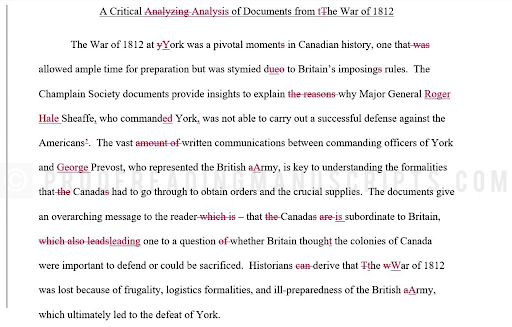
(Source: https://proofreadingmanuscripts.com/ )
