
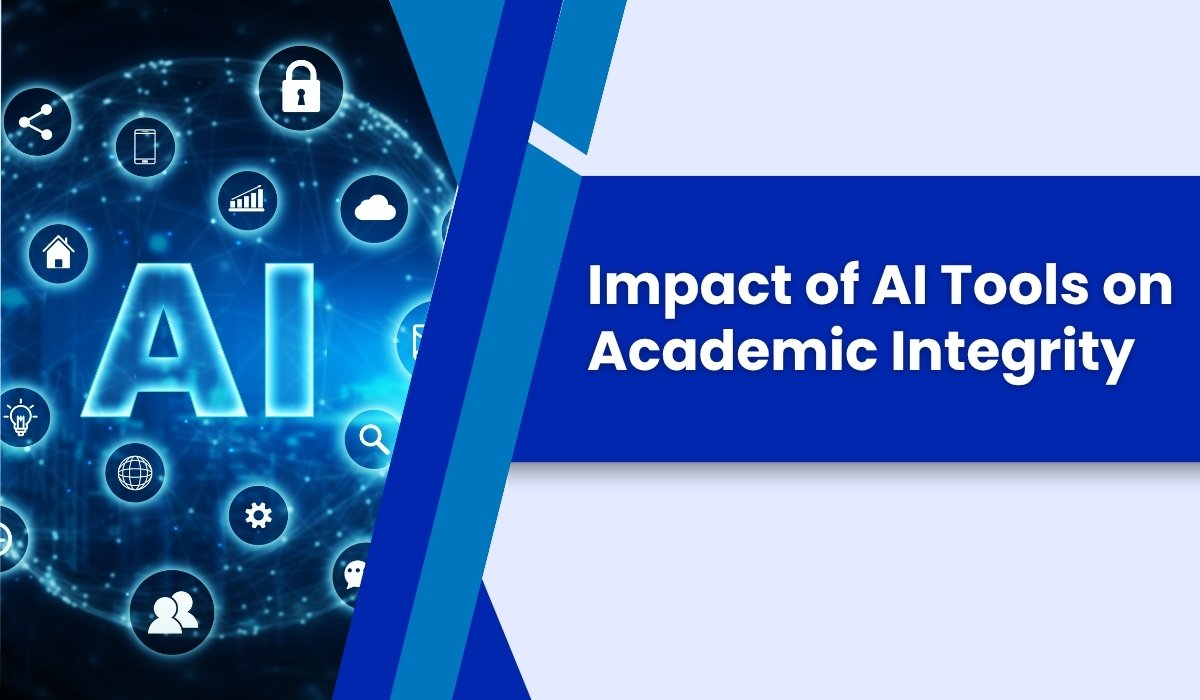
The use of Artificial Intelligence (AI) tools in education has transformed how students learn, conduct research, and submit projects. Advanced essay generators, plagiarism checkers, grammar checkers, and AI tools have made academic tasks easier and simpler. But the increasing dependence on artificial intelligence (AI) tools has also led to some critical questions about the implications of AI tools for academic integrity. Although they bring benefits, abuse of technology is compromising scholarship ideals and principles.
What Are AI Tools in Academia?
In academia, AI tools include various software applications that are designed to help students and teachers by using machine learning, natural language processing, and data analytics tools. Popular examples include:
- Essay writing machines and paraphrasing programs such as ChatGPT and QuillBot.
- Plagiarism seeks out tools: Turnitin and Grammarly.
- You know, the sort of thing you can do with a citation generator such as Zotero and EndNote.
- Apps that lift writing (Grammarly, Hemingway Editor)
These can be tools to take the pain away from academic writing, to save some time, and to give a helping hand to native speakers who can’t quite find the word they’re looking for.
The Positive Side of AI Tools
Before we delve into the pitfalls, it’s worth spending a moment to acknowledge AI’s positive role in academia.
- Enhanced Learning Support
Artificial intelligence-enabled tutoring platforms can offer customised learning experiences to students. Platforms like Khan Academy and Coursera’s AI-powered tools can even direct students based on their progress and interests. This is what fosters self-education and skill formation.
- Improved Writing and Research
AI writing assistants can assist students in improving their grammar, spelling, structure, language, and vocabulary. AI-driven research tools might be able to summarise complex papers, suggest sources and, one day, even translate academic texts — making global research much more accessible.
- Plagiarism Detection and Ethical Awareness
It is also ironic that a few AI tools that are out there tend to support academic integrity. Services such as Turnitin detect plagiarised content and allow facilitators and students to identify and correct possible infringement before submission.
However, these advantages can turn into drawbacks if the students are using AI tools not as part of the learning process but to cheat the system.
The Negative Impact of AI Tools on Academic Integrity
The problem with AI tools through the lens of academic integrity is most apparently seen by what happens when they are misused. The distinction between homework help and cheating is rapidly vanishing.
- Essay Writing and Academic Fraud
Some of the most direct threats are AI-authored essays. Authors can sign up for a learning service. Students can be ‘credited’ for work produced by an AI chatbot without having been subject to a learning experience. This does raise a significant moral quandary: if a student hands in computer-generated work, is the work really their own? Most colleges would say no.
- Plagiarism in Disguise
Some students “paraphrase” content using AI paraphrasing tools without grasping the content. Even if it won’t pop up as plagiarism, you are still not up to the academic standards if you do not credit and think for yourself. This kind of “obfuscated” plagiarism is very hard to track.
- Erosion of Critical Thinking
Depending on AI for things like thinking of ideas, organising an essay or solving a problem can dull creativity and the ability to think analytically. Gradually, we may be passive listeners rather than active learners—reliving, finding new ways to accomplish our immediate tasks.
- Unequal Playing Field
AI tools may not be accessible to all students equally. Some premium AI services are costly, creating disparities in educational access and opportunities. This undermines the principle of fairness in academic assessment.
How Institutions Are Responding
To address these challenges, academic institutions are changing policies, implementing AI literacy courses, and using AI-detection tools. Some key strategies include:
- Clear Guidelines on AI Usage
Several universities now offer clear guidelines for implementing AI tools into academic work. This means rules about when and how tools are allowed to be used and what counts as plagiarism or misconduct now that AI is really taking hold.
- AI Detection Tools
Tools like GPTZero and Turnitin’s own AI detection feature make good on educators’ abilities to spot content that is likely to be machine-generated. Though not foolproof, they serve as a deterrent and aid investigations when required.
- Emphasising Academic Integrity
Universities are doing more to emphasise the significance of academic integrity through workshops, classes, and honour codes. The academisation is geared towards the education of free minds and virtuous conduct.
- Promoting AI Literacy
Increasingly, educators are now working to teach students how to use A.I. responsibly — as a tool to help them with their work, not replace their own intellectual effort. As we saw with IBM’s work for the Nazis, knowing the ethics of AI is as important as knowing how to use it.
Striking a Balance: Responsible AI Use
The effect of AI tools on academic integrity does not necessarily have to be negative. Responsible use of these tools can improve education, not detract from it.
- Use as a Learning Aid
AI should be a guide, not a crutch. For example, it is permissible to use an AI grammar checker to improve an essay you have written. But it’s still not ok to turn in an AI-written essay with no input from yourself.
- Credit Where It’s Due
If there is a substantial contribution from AI tools, an acknowledgement of this could prevent the possibility of entering ethical murky waters. As with any citation, AI help can be reported when it is possible.
- Encourage Human-AI Collaboration
Future academic configurations might be composed of collaborative assignments in which students learn to use AI to create content but are assessed for their ability to critique, revise, and reflect on it. This kind of opens the average user to be a little more creative and more invested.
Conclusion
The emergence of AI tools in education is an opportunity and a challenge. Although AI tools are packed with advantages for learning and writing, the influence of these tools on academic integrity cannot be denied. Misuse may result in plagiarism, weakening critical thinking skills, and loss of trust in academic credentials.
Are you concerned about AI in the classroom taking over the education space or perhaps replacing teachers? The answer is in creating an ecosystem where innovation and honesty are inseparable twins. In the constantly changing digital era, to stand by academic values and at the same time invite technology is the future objective.